



 广告
广告





















































首页 > automotive-testing > 正文
Toyota uses AV technology to improve safety and efficiency of durability testing
2019-09-04 23:35:50· 作者:RACHEL EVANS

Toyota has begun using autonomous vehicle (AV) technology to improve the safety and efficiency of its new vehicle durability testing.
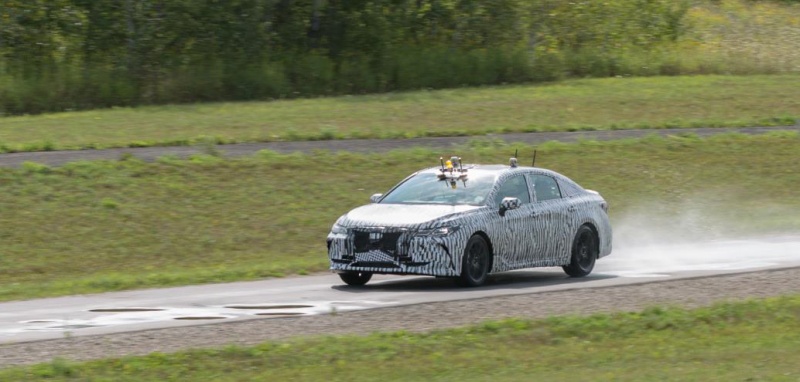
Toyota has begun using autonomous vehicle (AV) technology to improve the safety and efficiency of its new vehicle durability testing.
Rough-road durability testing for Toyota’s North American vehicles is being conducted on a course in Michigan that the Japanese auto maker has specifically designed with potholes, dips and other track surface defects that recreate all the road-induced punishment that the average vehicle can expect to encounter during its lifetime in a single proving ground-conducted evaluation.
However, rather than a human driver enduring this punishing testing experience, Toyota is now carrying out it out with an automated system in the driver’s seat. So, when planning for durability testing began on prototypes of the all-new Avalon, Toyota sat a robot down at the wheel!
The results were not just that that human drivers were spared the bumpy ride, but using the robot also resulted in greater efficiency and safety as well as reduced test times.
“When our vehicle performance development (VPD) team began looking at testing for the 2019 Avalon, they developed a system that adapted and improved existing technology to allow the car to automatedly navigate around the course,” said Avalon chief engineer Randy Stephens.
“This not only saved the engineers and technicians from having to endure the gruelling ride, it also provided a more accurate test cycle. The system was proven during Avalon development, and we plan to use it during all future North American vehicle development cycles.”


 广告
广告 编辑推荐

最新资讯
-
展会预告 | TCT亚洲展倒计时!思看科技五大
2026-03-10 20:50
-
整车性能测试体系:汽车试验工程的基本框架
2026-03-10 12:54
-
联合国法规R76对轻便摩托车前照灯远近光性
2026-03-10 12:15
-
联合国法规R75对摩托车与轻便摩托车气压轮
2026-03-10 12:14
-
联合国法规R74对L1类车辆灯光与光信号装置
2026-03-10 12:14
